


Finding the best aircraft maintenance toolkits is crucial for any aviation mechanic.
It’s a big investment, and you want the right tools to do the job safely and efficiently.
Plus, having your own toolkit can be a real point of pride for a mechanic.
But where do you start?
With all the brands, tool types, and tool kits out there, choosing might feel pretty overwhelming.
This is where I come in.
I’m here to break down everything you need to know to find the perfect tool kit for your needs, whether you’re just starting your career or you’re a seasoned pro looking to upgrade.
We’ll look at the top-rated toolkits on the market, talk about important factors to consider, and answer some frequently asked questions.
So, if you’re ready to step up your aviation maintenance game with the best aircraft maintenance toolkits available, stick around!
What are the Best Aircraft Maintenance Toolkits?
You wouldn’t trust just any wrench to keep a plane in the air, right?
Choosing your toolkit is a big deal, and going with a trusted brand is a smart move.
To help you out, I’ve compiled a list of five top-rated aircraft maintenance toolkits known for quality and completeness:
1. Red Box Comprehensive Aircraft Mechanics Cabinet – Best Overall
best Overall

Overview
Red Box focuses on tool control with a heavy emphasis on organization.
They specialize in tool kits designed for aviation mechanics, offering pre-configured sets and customizable cabinets.
Red Box’s cabinets come with laser-cut foam that has space for every single tool, so you can immediately tell what’s missing – a real time saver in a fast-paced environment.
Like Snap-on, this is a top-tier choice for pros who need to keep their tools perfectly organized and know at a glance if anything is missing.
Key Benefits
- Shadowed 633-piece SAE and metric set that includes mixed brands of BACHO, SnapOn and various others.
- 12-drawer steel roll-away cabinet with Lock & Go latching system that keeps the ball-bearing drawers from opening when you move the box.
- Scratch-proof and anti-rust powder coating.
Pros
- Two colors of shadowing inlay make missing tools pop for better tool control.
Cons
- Mixed tool brands included in kit may turn some people off.
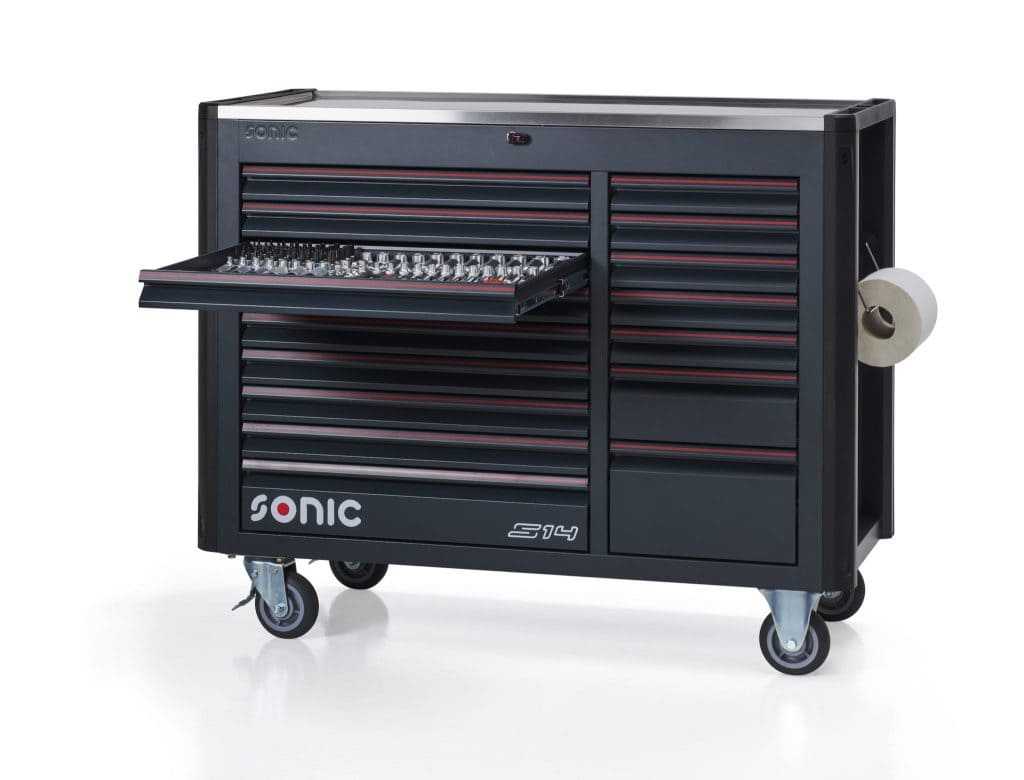
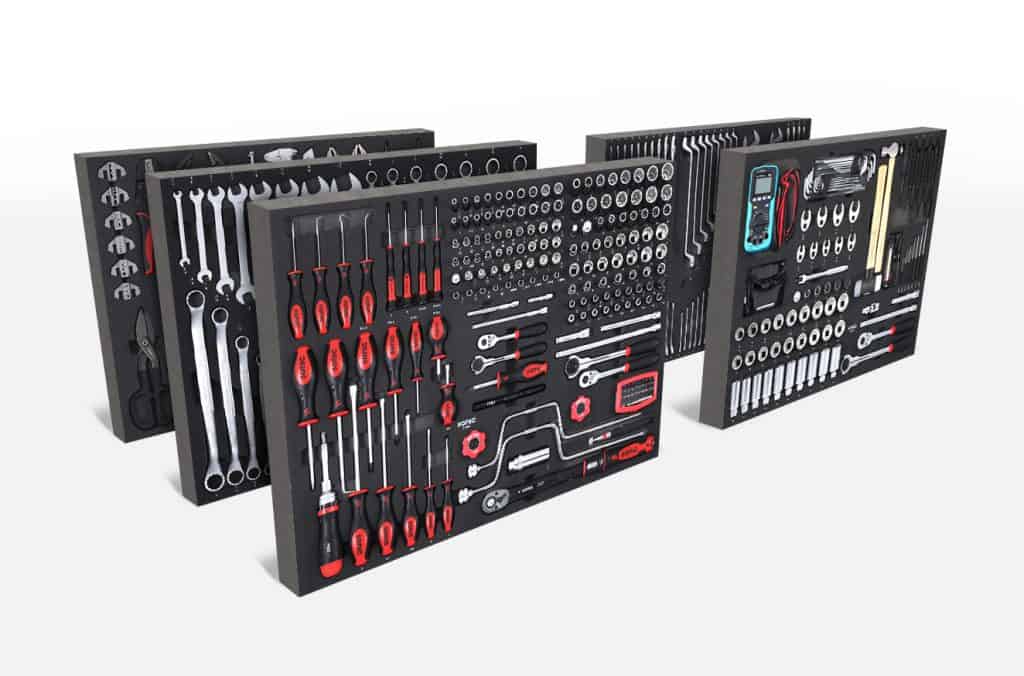
2. Sonic Aviation Toolset (Advanced) – Best Starter Kit
Best starter kit
Overview
Sonic is another well-regarded brand that offers comprehensive aviation tool kits.
Their Advanced Aviation Toolset boasts a wide range of tools for general maintenance.
While their brand reputation is a bit younger than Snap-on, many mechanics appreciate Sonic’s quality and thoughtful design.
Key Benefits
Pros
- High level of customization available – toolbox choices & etching.
Cons
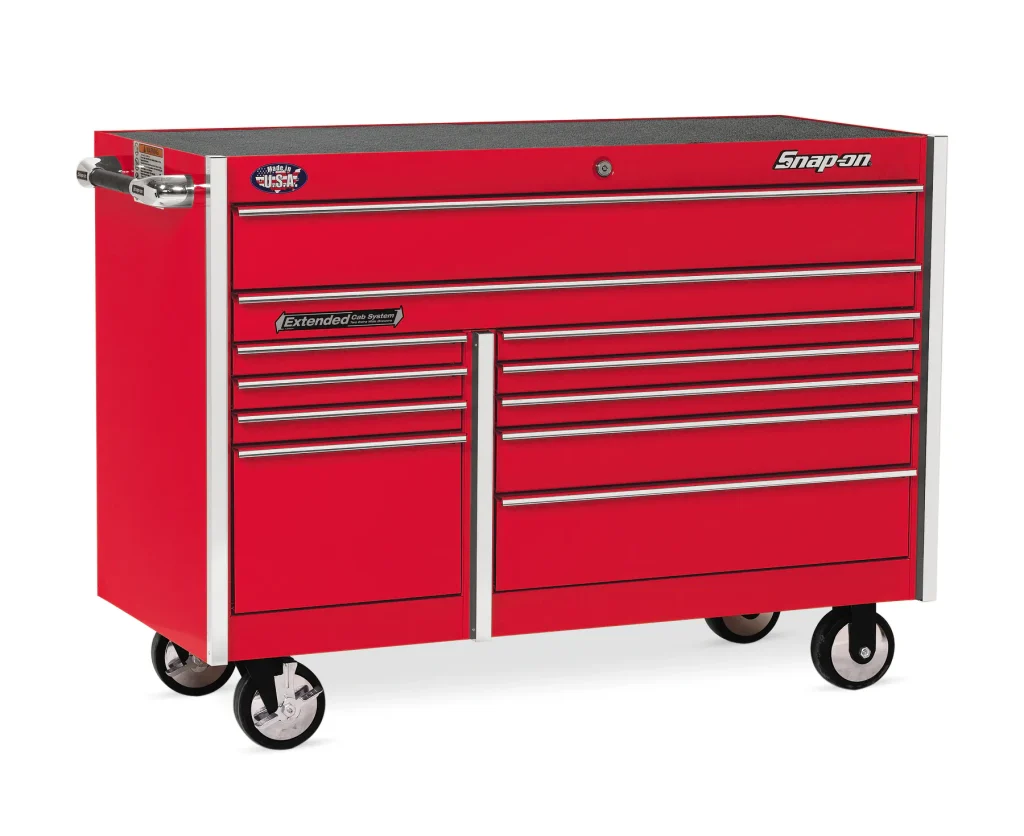
3. Snap-on Master Aviation Kit – Best for Big Spenders
best for big spenders

Overview
Snap-on is a big name in the tool world for a reason: their tools are known for their high quality, durability, and proprietary steel that allows for tighter tolerances.
This means you’re getting tools that can handle the demanding work of aircraft maintenance.
The Master Flightline and Hangar Kits are packed with everything you’ll likely need, organized neatly in custom foam for easy access and inventory control.
Plus, the rugged storage solutions mean your investment is well protected.
Yes, they are pricey, but a Snap-on kit can last you a lifetime – and the company’s lifetime warranty backs that up.
Key Benefits
Pros
Cons
4. Red Box Comprehensive Aircraft Avionics Mechanics Cabinet – Best for Avionics
If you specialize in avionics, this one’s for you.
This Red Box Avionics cabinet is designed specifically for the unique needs of avionics technicians, providing a comprehensive set of specialized tools.
You’re getting the same quality foam inserts and organizational features of Red Box’s general tool kits, but tailored specifically for the electrical side of things.
Key Benefits
Pros
Cons
5. Proto Master Technician Maintenance Set
my pick


Overview
Proto provides another great choice for a complete set.
With 613 pieces and custom foam inserts, it’s a great option if you’re looking for a quality kit at a slightly lower price point than some of the bigger brands.
It’s known for its combination of value and quality and is a popular choice for professionals starting out.
Key Benefits
Pros
Cons
What is an Aircraft Maintenance Toolkit?
An Aircraft Maintenance Toolkit is a collection of specialized tools, equipment, and resources used by aircraft maintenance technicians to perform routine maintenance, repairs, and inspections on aircraft.
The toolkit is designed to ensure the safety and airworthiness of the aircraft, and its contents may vary depending on the type of aircraft, its age, and the maintenance tasks required.
How Can Aircraft Maintenance Toolkits Benefit You?
Aircraft Maintenance Toolkits are designed to provide a comprehensive range of tools, equipment, and resources to support the maintenance, repair, and overhaul (MRO) of aircraft.
By investing in a well-stocked toolkit, aircraft maintenance technicians, mechanics, and engineers can reap numerous benefits that enhance their work efficiency, safety, and overall performance.
Buyer’s Guide: How to Choose the Best Aircraft Maintenance Toolkits for Your Needs
Choosing the best aircraft maintenance toolkit doesn’t just mean picking the biggest, most expensive set.
Several factors influence the best decision.
Make sure you consider the following:
1. Your Budget
Aircraft mechanic tools can be expensive.
Tool truck brands like Snap-on and Matco offer excellent quality, but the price tag reflects that.
Don’t overspend.
Brands like Craftsman, GearWrench, or even aviation tool kits from Harbor Freight offer reliable tools at a lower cost.
They’ll get the job done if you’re starting or have a tight budget.
I know a lot of people who still swear by their Craftsman tools, which are backed by a lifetime warranty.
It’s good to prioritize buying high-quality tools with moving parts from the bigger brands, especially when the warranty can really save you.
2. Your Work Environment
Where will you be working?
Will you need a portable kit that you can easily carry around on the flight line, or will you have a dedicated work space in a hangar?
This will help you determine if you need a tool chest, a roller cabinet, or a portable case.
If portability is a must-have, you might even start with a well-organized tool bag and then build your collection over time.
3. Specialty Tools
If you specialize in a specific area of aircraft maintenance, such as avionics, sheet metal work, or powerplant, make sure your toolkit includes the special tools you need for that specialty.
This may involve adding specific tools to a more general kit, so don’t forget about those.
4. Tools To Overspend On (and Those To Buy Cheap)
I’ve learned a thing or two during my years as an A&P mechanic, and one of them is knowing when to invest in high-end tools and when to grab the more affordable option.
When you’re aiming to perfect your toolkit, don’t fall for overpaying for basic tools like sockets, pliers, picks, files, hammers, and inspection mirrors.
I get it, having that flashy Snap-on hammer is satisfying.
But I’ve gotten the exact same work done with a trusty Craftsman hammer for a fraction of the price.
And don’t even get me started on the tool truck markup on magnets – save your money for things that truly matter.
You’ll need that cash later for when you need that specific torque wrench.
Remember, sometimes even the cheapest options, like a dollar magnet from Sears or an old hard drive (packed with those rare earth magnets) can get the job done.
Resourcefulness is key in this profession.
Tools with moving parts or ones you depend on daily – now those are worth the splurge.
High-quality ratchets, safety wire pliers, and specialized tools can make a real difference in efficiency and safety.
Don’t be afraid to ask fellow A&P mechanics and instructors for their brand recommendations.
They’ll often have opinions from years of experience on which brands excel at different tool types, like Snap-on’s highly praised safety wire pliers or Matco’s well-reputed ratchets.
A fellow mechanic told me a good set of Allen wrench sockets can save a ton of space and will replace bulky T-handles, plus you can actually use them to torque fasteners.
Little things like that can make a world of difference in your toolkit.
5. Organizational Preferences
How do you like to keep your tools organized?
If you need absolute visual confirmation of each and every tool, shadow foam is a great choice. Red Box tools offer this.
You might prefer drawers, trays, or even pegboards, but there are options available.
Even a good toolbox should have sturdy drawers that open smoothly and hold up under heavy use.
Remember, your goal is to always be able to find the right tool quickly and easily.
Being well-organized saves time and stress.
6. Employer Requirements
Some companies have specific tool requirements, including box shadowing or tool labeling policies.
Be sure to ask your employer for a minimum tool list, especially when starting a new position.
It’s also worth knowing that most employers will provide calibrated tools, so factor that into your personal tool investment plan.
If you’re going for an A&P certification, some instructors at schools like National Aviation Academy will offer similar guidance on toolkit necessities, even down to specific brand recommendations.
Remember, there were over 131,500 aircraft mechanics and service technicians employed in the US aviation industry in 2017, so good information from those in the know can be a huge benefit.
Take advantage of all available resources, especially those from the veterans in the field.
Essential hand tools
These are a must-have for any aviation mechanic and are usually found on employer minimum lists:
- Combination Wrenches (SAE and Metric)
- Ratcheting Wrenches
- Sockets (1/4”, 3/8”, and sometimes 1/2” drive)
- Allen Wrenches
- Screwdrivers (Phillips, Slotted, Torx)
- Pliers (Diagonal Cutters, Needle Nose, Safety Wire, Soft Jaw)
- Hammers (Dead Blow, Ball Peen, Plastic Tip)
- Measuring Tools (Scales, Tape Measure, Calipers)
- Inspection Tools (Inspection Mirror, Flashlight)
- Miscellaneous (Safety Wire, Cotter Pin Puller, Gloves, Multimeter)
Wrapping Up
Choosing the best aircraft maintenance toolkits is a big decision, one that can seriously impact your efficiency and ability to do your best work as a mechanic.
Whether you’re just beginning or you’ve been in the industry for decades, it’s a choice worth giving a lot of thought.
Don’t forget to factor in all the unique requirements and demands of the aviation industry, along with the crucial factors we’ve discussed.
FAQs
What brand tools do aircraft mechanics use?
There isn’t a single “best” brand. The reality is most mechanics will own a blend of tools from different brands, each known for their strength in certain tools.
Some of the most common brands include:
| Brand | Reputation | Distribution |
|---|---|---|
| Snap-on | Top-of-the-line, high-quality, known for tight clearances and durability | Tool trucks, online |
| Matco | Comparable quality to Snap-on, with slightly lower pricing in some cases | Tool trucks, online |
| Craftsman | Solid baseline brand with a lifetime warranty; innovative and generally well-liked | Retail stores, online |
| Mac Tools/Cornwell | Quality a notch below Snap-on, smaller distribution network | Tool trucks, limited online availability |
| Knipex | Highly-regarded for its pliers, cutters, and specialized tools | Retail stores, online |
| Milbar | Widely known for its safety wire pliers and high-quality cutters | Aviation supply stores, online |
| SK/Proto/Armstrong/Wright/Blackhawk | Trusted brands for a good balance of quality and affordability | Retail stores, online |
What are the 4 pillars of aircraft maintenance?
Aircraft maintenance revolves around four fundamental pillars to ensure aircraft safety and airworthiness. They are:
- Inspection: Identifying potential problems before they become safety hazards.
- Troubleshooting: Identifying and understanding the cause of an existing problem.
- Repair: Addressing any identified problems to restore functionality and safety.
- Preventative Maintenance: Regularly scheduled tasks and procedures that aim to minimize wear and tear, thereby preventing future issues.
What are the essential hand tools that every aviation maintenance technician should have in their toolbox?
Some essentials that can’t be overlooked are combination wrenches in both SAE and Metric sizes, a quality set of ratchets and sockets, a variety of screwdrivers (including Phillips, Slotted, and Torx), diagonal cutters, and needle-nose pliers.
Also, you will need a sturdy set of safety wire pliers.
Dead blow, ball peen, and plastic tip hammers are necessities for most maintenance jobs, as well as a selection of measuring tools and inspection tools like a bright flashlight and an inspection mirror.
Rounding out your basic toolset will be things like cotter pin pullers, gloves, safety wire, and a multimeter.
What tools do aviation inspectors use?
In addition to the usual basic hand tools, aviation inspectors frequently rely on specialized tools such as bore scopes for inspecting hard-to-reach areas like engines, thickness gauges for assessing metal wear, rivet guns, and bucking bars for structural inspections.
Additionally, they’ll use dye penetrant kits for crack detection.