The best aircraft mechanic school for most people is the cheapest FAA Part 147 school they can realistically finish, because every graduate takes the same FAA written, oral and practical tests.
Tuition and fees run from $7,705 at TCAT Nashville to $55,415 at Saint Francis University for the same A&P certificate.
I’m an A&P with 15+ years in the field and a degree from Western Michigan University’s aviation maintenance program.
Below are the five numbers I’d get from any school before signing, what school actually costs, and when school isn’t your best route at all.
your tl;dr
Key Takeaways
– The FAA gives you two ways to qualify for A&P testing: graduate from a Part 147 school, or document 18 months of experience for one rating or 30 months for both (14 CFR 65.77).
– Since September 21, 2022, Part 147 schools build their curriculum to the FAA’s Mechanic Airman Certification Standards, and the FAA no longer approves each school’s curriculum.
– For 2026-27, TCAT Nashville lists $7,705 in tuition and fees for an 18-month program; Saint Francis University lists $55,415 total over five semesters.
– Budget the oral and practical exam fees separately unless the school includes them. Saint Francis builds $1,800 in examiner fees into its total.
– The median wage for aircraft mechanics and service technicians was $79,870 in May 2025, per the Bureau of Labor Statistics.
– A higher price buys speed, schedule, or bundled tools, not a different certificate.
Do you need to go to aircraft mechanic school to get your A&P?
No.
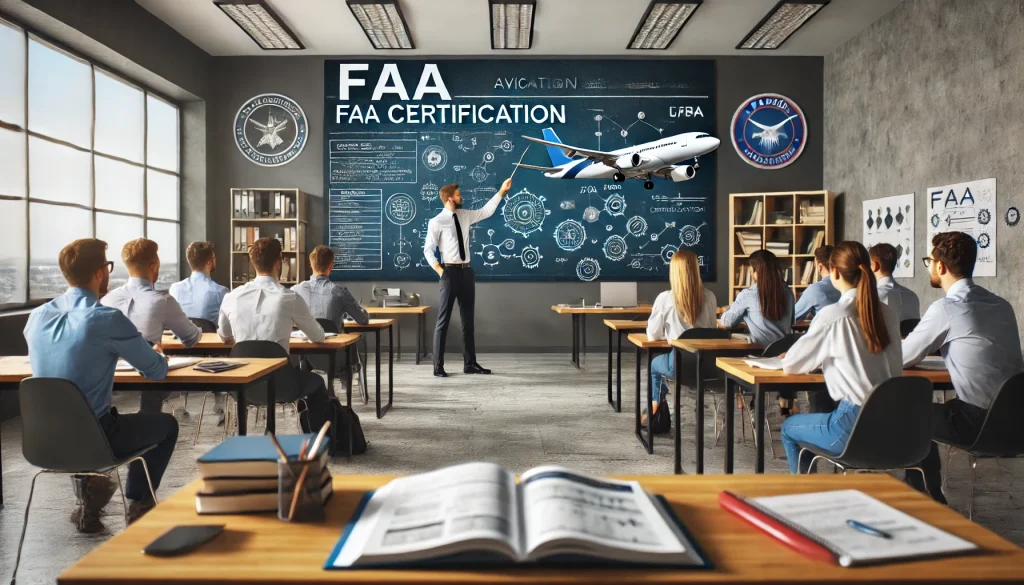
School is one of two routes the FAA accepts; the other is documented, full-time practical experience.
The FAA’s own mechanic FAQ says experience is measured against a typical 40-hour work week, and there’s no shortcut below 18 months for one rating or 30 months for both.
| Route | What the FAA requires | Typical time |
|---|---|---|
| Part 147 school | Graduate from a certificated school’s curriculum | 18 to 24 months at most public schools; some private academies offer 8, 12 or 16 months |
| Civilian experience | 30 months of documented experience on airframes and powerplants (18 for one rating) | 30 months minimum |
| Military experience | Documented experience in a qualifying aircraft maintenance specialty | Varies by specialty and time served |
I broke down the trade-offs of the school route in more depth in A&P school: the best way to get certified?, and if you served, how to get your A&P with military experience walks through turning your specialty into a test authorization.
If you’re still deciding between these routes, my free A&P Quickstart Guide lays out the options side by side so you can pick one before you spend money on any of them.
How much does aircraft mechanic school cost?

Aircraft mechanic school costs roughly $8,000 to $55,000 in tuition and fees, before FAA exam fees, tools, housing and lost income.
The spread is mostly public versus private, not quality of certificate.
| School | Type | Program length | Listed cost |
|---|---|---|---|
| TCAT Nashville | Public technical college | 18 months, 1,944 clock hours | $7,705 tuition and fees, plus $394 books and supplies |
| US Aviation Academy | Private academy | 8, 12 or 16 months | About $36,000 “all-in” |
| Saint Francis University | Private university | 5 semesters | $55,415 total |
Figures are what each school publishes for 2026-27 – confirm before you apply.
Note that US Aviation Academy’s figure comes from its own marketing page.
The costs schools leave out are where budgets break:
- FAA testing. If exams aren’t bundled, US Aviation Academy estimates $1,500 to $2,200+ for the written tests and the oral and practical with an examiner.
- Tools. Plan on around $1,000 for a solid starter set. My aircraft maintenance toolkit guide covers what to buy first and what can wait.
- Living costs. An 18 to 24 month full-time program means 18 to 24 months of reduced or no income. That is often a bigger number than tuition.
Federal financial aid, the GI Bill and scholarships from groups like Women in Aviation International and the Organization of Black Aerospace Professionals can cut the cost.
Ask each school’s financial aid office what applies to its program before you enroll.
What 5 numbers should you check before choosing an aircraft mechanic school?

Get five numbers in writing: total cost to certificate, months to finish on your schedule, first-time FAA pass rates, a placement rate with its definition, and your loan payment against realistic starting pay.
A school that won’t give you these is telling you something.
- Total cost to certificate, not tuition. Ask what’s included: tools, books, uniforms, and whether your first attempts at the written, oral and practical tests are covered. Two schools with the same sticker price can differ by $2,000+ once exams are added.
- Months to finish on your real schedule. Full-time days, evenings, or hybrid? A 24-month evening program you can keep a job through may beat a 12-month day program you’d have to quit work for.
- First-time pass rates on the FAA tests. Ask for the last two years for the general, airframe and powerplant written tests and the oral and practical. Ask how many students who started didn’t graduate, too.
- Placement rate, with the definition. “95% placement” can mean any job, or any aviation job, within 12 months. Ask what counts, and which employers hired last year’s class.
- Loan payment versus starting pay. Borrowing $40,000 at an assumed 7% over 10 years is about $464 a month. BLS puts the lowest 10% of the occupation group under $49,410 a year, about $4,100 a month before tax. That payment is roughly 11% of gross pay in year one. Run your own numbers before you sign.
Community college or private A&P school: is the price difference worth it?

For most people, no.
You’re paying for speed and schedule, not a better certificate, so the private premium only makes sense if it gets you working meaningfully sooner.
Here’s the math I’d use:
If a private academy finishes 8 months sooner than the community college near you, and you’d start around $4,100 a month (the BLS 10th percentile), that’s roughly $33,000 in earnings you’d get earlier.
That can cover a $25,000 to $30,000 price gap. If the time difference is 2 or 3 months, it usually can’t.
This is my reasoning from the published numbers, not a guarantee for your situation.
A community college waiting list changes the math too.
TCAT Nashville, for example, puts new students on a waiting list after a pre-assessment.
A 9-month wait erases the time advantage of a cheap program.
My experience at Western Michigan University was worth it, but every person’s experience will be different.
My 4-year bachelor’s of science degree in aircraft maintenance technology cost about $50,000 in 2007 – including room and board.
Today, I’d recommend a community college over a bachelor’s degree simply to avoid the large loan payments you’d typically have to make.
If you want your bachelor’s degree, see if your employer offers tuition reimbursement, or go to school part-time while you work so you can cover the costs as you go.
Employers won’t care so much which school you went to or whether you have a bachelor’s degree just to work on their aircraft.
If you want to see which programs I’d shortlist, I compared a few in the best aircraft maintenance training programs.
What is aircraft mechanic school actually like?

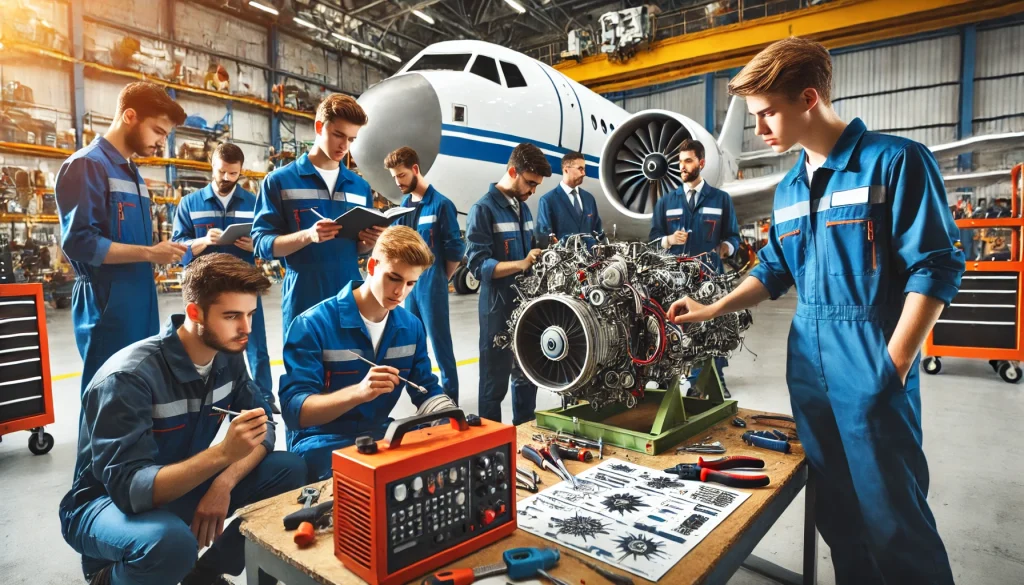
Expect long days split between classroom theory and shop time, and plan your life around them. Most full-time programs run on a weekday schedule for 18 to 24 months, and family or work commitments get harder to carry.
- Shop time matters more than anything on the brochure. Ask what share of hours you’ll spend on real aircraft and engines, not trainers bolted to a bench.
- Safety is graded, not suggested. You’ll be tested on procedures, torque values and documentation, because that’s what the job demands.
- You’ll buy tools. Some schools lend them; most expect you to build your own set.
- Teamwork is part of the job. Shift turnovers and inspections depend on clear communication. I wrote about a case where a mechanic’s judgment saved an aircraft delivery from a major delay, which is the kind of skill school starts building.
If you’re drawn to the electronics side, look for programs with avionics coursework. My guide on how to become an avionics technician covers that path.
The hardest part about school for me was learning the FARs because they were so boring and dry.
FARs are important, but can be tough to memorize because it’s not hands-on like much of the other parts of A&P school.
Flash cards, repetition, and quiet study time was helpful for getting me through memorizing the FARs in school.
Which aircraft mechanic schools are FAA Part 147 certificated?
The list below covers 181 schools and campuses, alphabetized.
It was compiled in 2024, so confirm a school’s current Part 147 status with the school itself before you apply, and use the five numbers above to compare the ones near you:
Frequently Asked Questions
How long does aircraft mechanic school take?
Most Part 147 programs take 18 to 24 months full-time, and some private academies run 8, 12 or 16 months.
Since the FAA’s 2022 Part 147 rule change, schools build curricula to the Mechanic Airman Certification Standards instead of fixed hour minimums.
My guide on how to become an aircraft mechanic covers the full timeline, including testing.
Can I get my A&P without going to school?
Yes. Under 14 CFR 65.77 you can qualify for testing with 18 months of documented practical experience for one rating, or 30 months working on both airframes and powerplants.
The experience has to be full-time equivalent and documented well enough for the FAA to accept it.
How much do aircraft mechanics make?
The median wage for aircraft mechanics and service technicians was $79,870 in May 2025, according to the Bureau of Labor Statistics.
New mechanics usually start well below the median, and pay varies by employer type and region.
Is a more expensive A&P school better?
Not for the certificate. Every Part 147 graduate takes the same FAA written, oral and practical tests.
A higher price can buy a faster schedule, bundled tools or exams, or a degree alongside the certificate, so compare those against the extra cost.
Do you need a college degree to be an aircraft mechanic?
No. BLS lists the typical entry-level education as a postsecondary nondegree award, which is what most Part 147 certificate programs grant.
A degree can help later if you want to move into inspection, management or engineering roles.