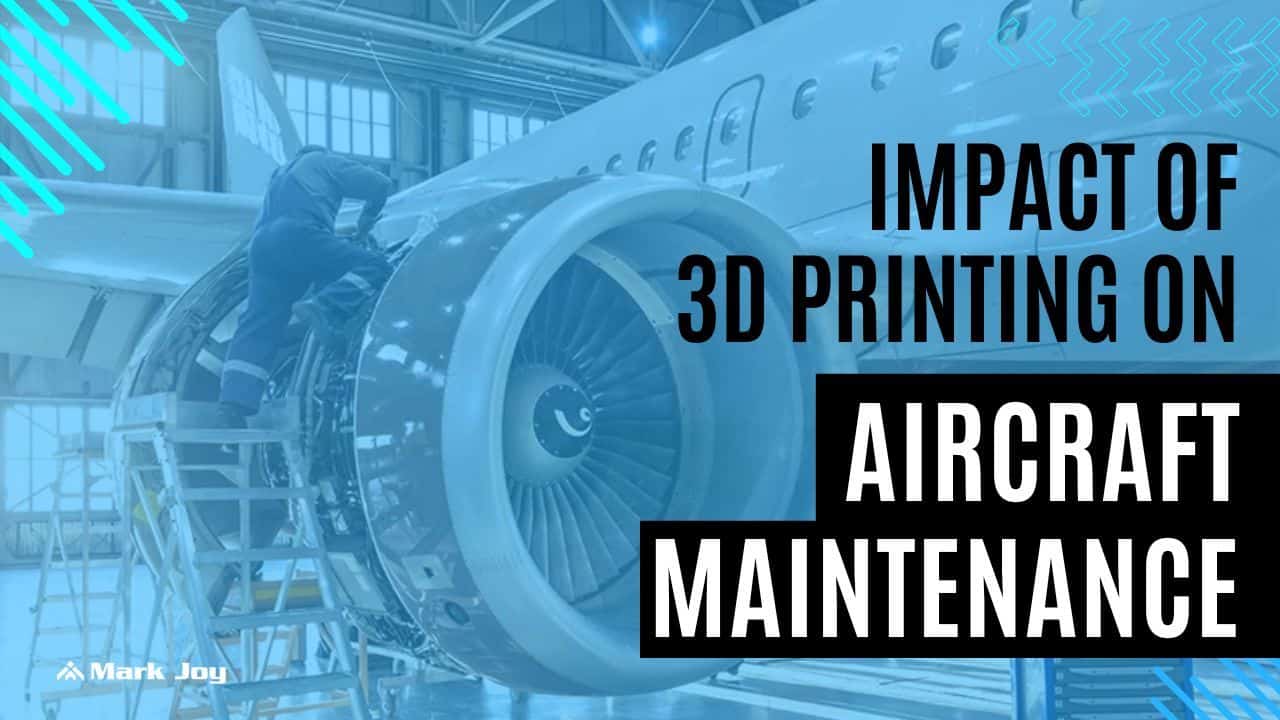
3D printing aircraft maintenance is changing how airlines handle repairs, part replacements, and even routine upkeep.
Instead of relying on distant suppliers and long lead times, airlines are using 3D printing, or additive manufacturing, to create parts on demand.
But 3D printing aircraft maintenance isn’t just about convenience; it’s transforming efficiency, sustainability, and innovation within the aviation industry.
The Benefits of 3D Printing for Aircraft Maintenance
3D printing offers numerous benefits for aircraft maintenance. It allows airlines to depend less on traditional supply chains, accelerate repair times, and create lighter and more efficient aircraft. In essence, 3D printing allows the production of parts on-site and on demand, streamlining logistics and minimizing downtime.
Faster Repairs and Reduced Downtime
A grounded plane equates to lost revenue for airlines. When a critical part fails, getting it replaced through traditional means can take days or even weeks. This is where 3D printing excels.
Consider a scenario involving a Travis C-5M that experienced damage to its aerodynamic fairing panel mid-flight. The incident unfolded in Charleston AFB, South Carolina, last December. Previously, this would have resulted in an extended wait for a replacement part. However, leveraging 3D printing, a resolution was achieved much faster. The US Air Force promptly printed a replacement part on-site, demonstrating this technology’s ability to minimize aircraft downtime and ensure mission readiness. This on-demand manufacturing helps get planes back in the air faster, saving airlines money and maintaining passenger satisfaction.
Cost Savings Through On-Demand Manufacturing
Storing a vast inventory of spare parts is expensive. With 3D printing, those parts are “stored” digitally and printed only when needed. This approach cuts warehousing costs and reduces the risk of parts becoming obsolete.
Companies like THE AVIATION AM CENTRE GmbH (AAMC) and EOS are at the forefront of utilizing 3D printing for spare part production, improving both availability and affordability.
Lightweight Designs for Increased Efficiency
3D printing empowers engineers to craft intricate, lightweight designs unattainable with traditional manufacturing. This is crucial in aviation, where weight directly impacts fuel consumption.
Lighter planes consume less fuel, resulting in lower operating costs and reduced emissions. Airbus’s Global Market Forecast predicts the commercial aircraft upgrades services market will hit \$180 billion USD over the next two decades, illustrating the profitability of adopting fuel-reducing technologies like 3D printing. This focus on lightweighting for efficiency benefits airlines financially while supporting a greener environment.
Customization and Complexity: Breaking New Ground
3D printing isn’t limited to simple parts; its capabilities extend to intricate components. Take, for instance, the production of components in Dubai, where 3D printing is used to produce intricate components that were traditionally assembled from multiple parts as a single unit. This offers engineers more freedom to design parts optimized for specific functions.
They’re no longer restricted by traditional manufacturing methods, allowing them to push the boundaries of aircraft design.
Case Study: Emirates and 3D Systems
Dubai-based Emirates Engineering, a prominent name in aircraft maintenance, has incorporated 3D printing for cabin parts. Collaborating with 3D Systems, they’re creating lighter video monitor shrouds using a flame-retardant nylon-12 thermoplastic called Duraform ProX FR1200.
This innovation not only makes planes lighter but also demonstrates a dedication to using cutting-edge technology to enhance passenger experiences.
Looking Ahead: 3D Printing Aircraft Maintenance
Although 3D printing is an emerging technology, its role in aircraft maintenance is projected to grow. This shift, while gradual, represents a significant change in aviation for several reasons.
- **New Materials**: As printable materials advance, anticipate stronger, lighter, and more heat-resistant options. This paves the way for 3D printing even more critical aircraft components.
- **Expanding Applications**: The future might witness everything from engine parts to interior cabin components being routinely 3D printed. For instance, British Airways is exploring 3D printing to further streamline aircraft maintenance, including window parts and tray tables. They believe these advancements could significantly improve punctuality by eliminating the need to fly spare parts globally.
- **Sustainability**: 3D printing aircraft maintenance contributes significantly to making aviation more environmentally friendly. On-demand part creation moves the industry toward a less wasteful future.
Take, for example, the A350 XWB aircraft, introduced in 2015, which boasts over 1,000 3D printed parts . This exemplifies additive manufacturing’s vast potential to reshape aviation. This case emphasizes a movement toward sustainability as 3D printing minimizes waste compared to traditional methods.
Conclusion
3D printing aircraft maintenance is reshaping the aviation industry. This transformative technology is propelling innovation and sustainability by empowering airlines to print intricate components, ranging from seat buckles to vital engine parts, at a fraction of the time and cost of conventional methods. This results in faster repairs and reduced downtime. With 3D printing, airlines are building a brighter future for the industry, one layer at a time.
FAQs About 3D Printing in Aircraft Maintenance
What types of aircraft parts are commonly 3D printed?
Many aircraft parts are now being 3D printed, ranging from cabin components like air vents and monitor shrouds to engine parts such as fuel nozzles and turbine blades. While these parts are often non-critical, non-load-bearing components, advancements in materials are expanding what’s possible.
Do 3D-printed aircraft parts meet safety regulations?
Safety is non-negotiable in aviation. Therefore, every 3D-printed part must adhere to strict regulations. The Federal Aviation Administration (FAA) and European Union Aviation Safety Agency (EASA) are actively developing guidelines and certifications.
Some airlines, like Etihad Airways, are already certified to design, produce, and utilize 3D- printed parts , demonstrating their adherence to rigorous safety standards.
How does 3D printing contribute to sustainability in aviation?
3D printing offers a two-pronged approach to reducing the aviation sector’s carbon footprint. First, on-demand manufacturing diminishes transportation and storage requirements. Second, lightweight 3D- printed parts boost aircraft fuel efficiency, directly lowering emissions.